


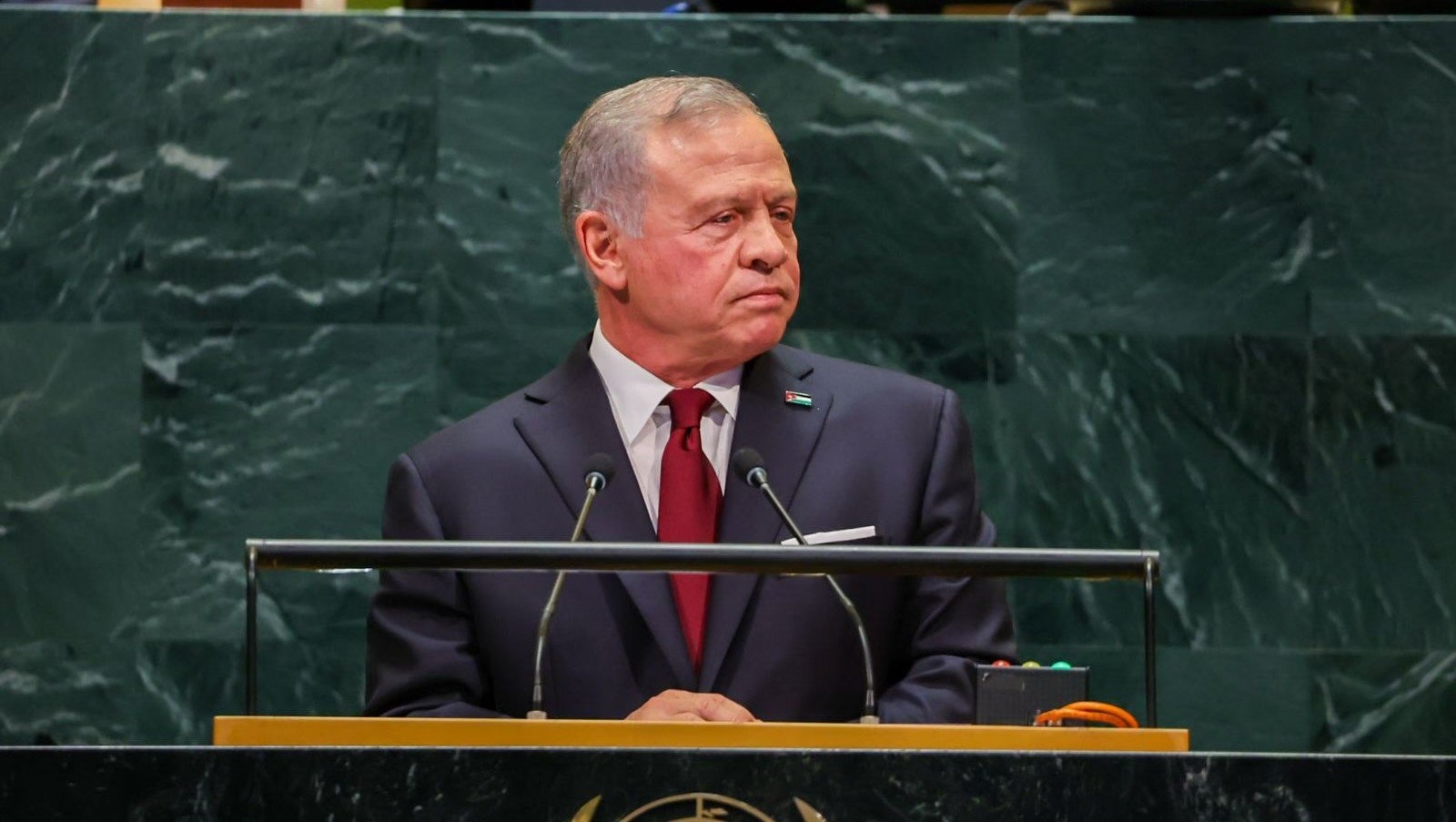
The General Union of Voluntary Societies commended the content of the speech delivered by His Majesty King Abdullah II at the United Nations General Assembly, particularly its emphasis on the international community's responsibility regarding humanitarian issues and the imperative not to allow the suffering of peoples caused by wars and conflicts to become a normalized reality.
Union President Amer Al-Khawaldeh stated that the Royal address held the international community accountable for the plight of the Palestinian people, especially in the Gaza Strip, stressing that the ongoing humanitarian suffering demands international action to protect civilians and uphold their rights and dignity.
He added that His Majesty’s assertion—that principles must not shift simply because global attention to crises wavers—conveys a humanitarian message that transcends regional boundaries. He noted that victims of war, conflict, and displacement require a sustainable response that is not contingent upon their crises remaining at the forefront of international and media attention.
Al-Khawaldeh highlighted that His Majesty’s remarks on protracted crises and their humanitarian repercussions underscore the importance of international institutions capable of fulfilling their responsibilities and effectively enforcing the law. He emphasized that protecting human life and ensuring the essentials of a dignified existence for those affected must remain central to crisis response efforts.
He pointed out that His Majesty’s reaffirmation of Jordan’s continued support for the steadfastness of the Palestinian people and UNRWA reflects the Kingdom’s unwavering stance on the Palestinian cause and its humanitarian dimensions, stressing the importance of sustained international efforts to support Palestinians and alleviate their suffering.
Al-Khawaldeh emphasized the vital role played by charitable and community organizations in fostering values of mutual support and solidarity, and in assisting the groups most affected by crises. He highlighted the importance of integrating their efforts with those of official institutions and humanitarian organizations to enhance the capacity to address humanitarian needs.